We accept USD, EUR, PLN and 19 other currencies
Seamless communication in English and Polish
We always meet deadlines - no more dragging projects

Online e-prescription platform for a medical center

OpenMed Recepty: an online e-prescription and sick leave platform we co-create with the OpenMed Group

Patients wanted an e-prescription or a sick leave certificate without visiting the clinic, and OpenMed doctors were losing time on repetitive visits. Together with the OpenMed Group we built an online e-prescription platform, which we co-run as one of its owners. The platform successfully serves hundreds of patients every month.

WebProfessor has a very good understanding of what makes the medical sector different, both in terms of legal requirements and the real expectations of patients and staff.
Karol Sierpatowski, Board member

/ Project facts

Client

OpenMed Recepty (OpenMed Group)

Industry

Technologies

Scope of work

process analysis business model workshops UX visual design functional specification doctor's panel P1 integration online payments product development

Results

  • Hundreds

    patients every month

  • +45 %

    doctor productivity

  • 5/5

    patient rating on Google

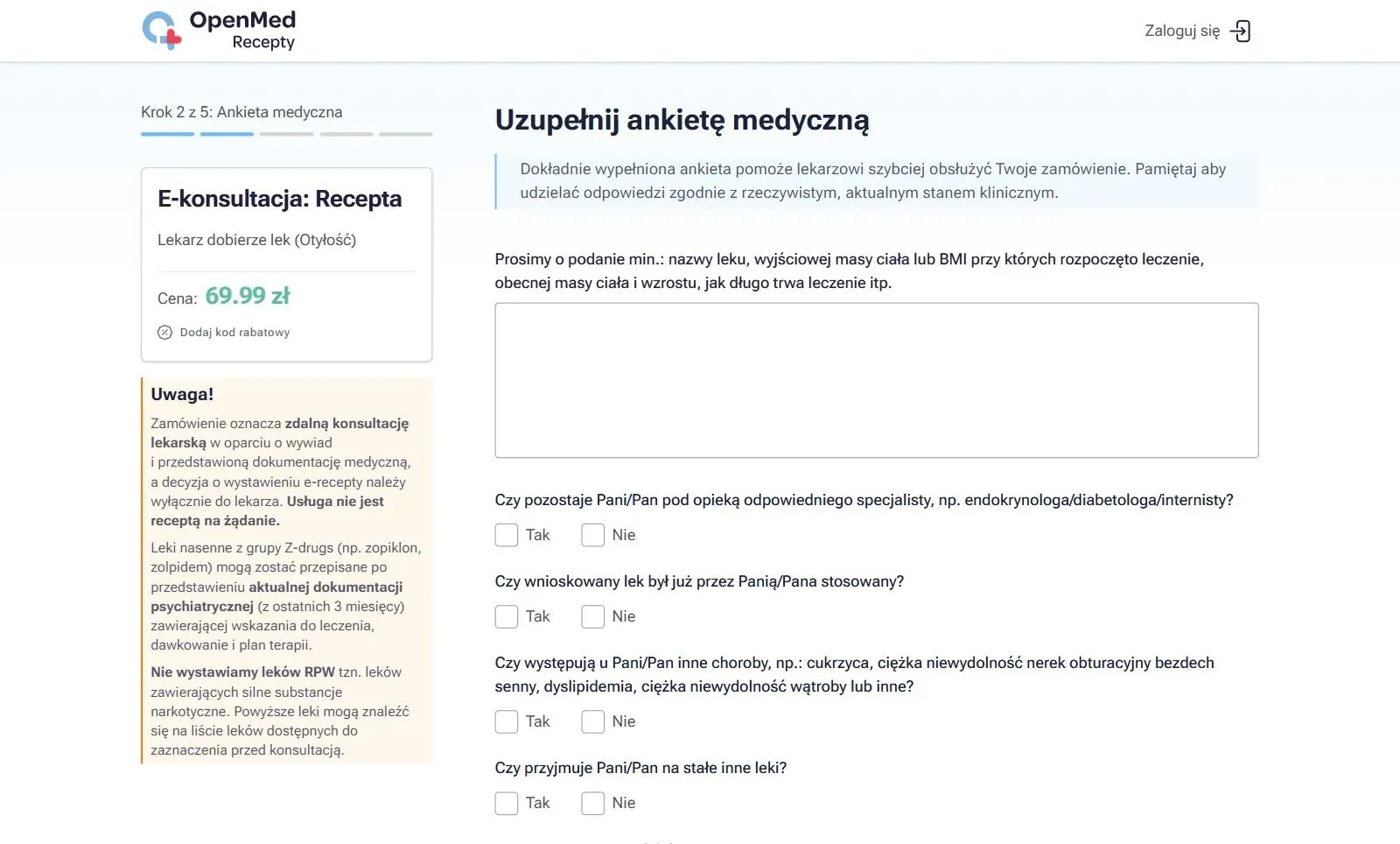
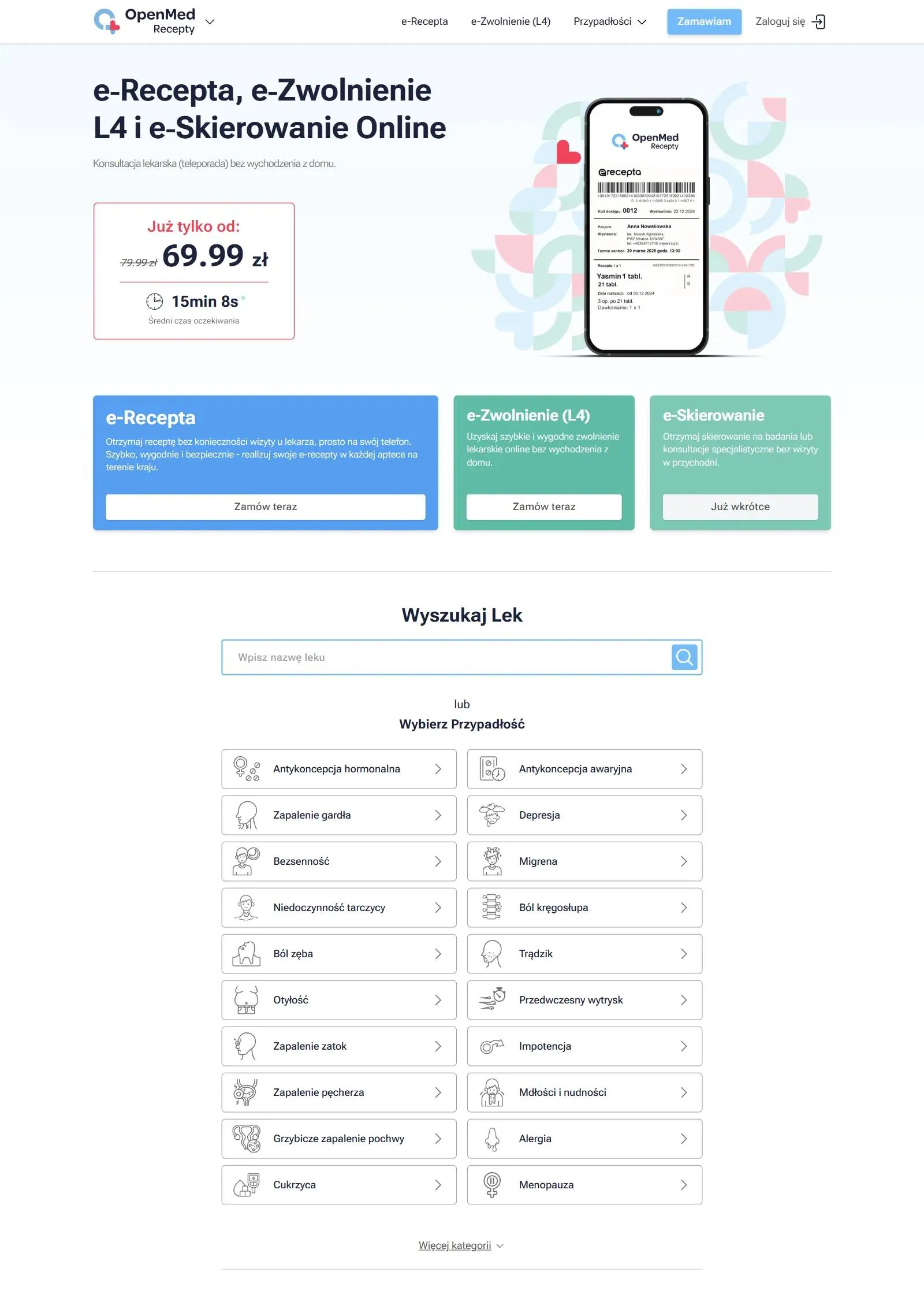
Home page of recepty.openmed.pl: price and average waiting time, cards for e-prescription, sick leave certificate and e-referral, a medication search and a list of conditions
The patient sees the price and average waiting time right away. They can start an order from a service, a medication name or a condition from the list.

/ 01 problems and challenges

OpenMed wanted doctors from its clinics to issue e-prescriptions and sick leave certificates remotely

OpenMed runs medical centers in Warsaw and Płock, where doctors see patients in more than 40 specialties. Some in-person visits followed the same pattern every time: the patient needed a prescription, a sick leave certificate or a referral. Doctors spent time on them that was then missing for harder cases. Patients, in turn, wanted to get such documents quickly and at an affordable price, ideally without leaving home. Together with OpenMed we decided to build our own platform for issuing e-prescriptions online, where requests are handled by the same doctors who see patients at the network's clinics.

A document issued online had to end up where a document from the consulting room does: the e-prescription in the P1 system and the sick leave certificate at ZUS. The platform also had to protect patients' medical data, but in a way that would not slow down a doctor handling requests one after another.

What had to be solved

  • Short turnaround - from placing an order to the document reaching the patient should take a dozen or so minutes.
  • Documents in state systems - an e-prescription from the platform has to reach P1 and a sick leave certificate has to reach ZUS, with no extra work for the doctor.
  • Medical data protection - security measures must not slow down placing an order or the doctor's work.

/ 02 our process

We co-create the platform with OpenMed: from the business model to product development

OpenMed Recepty was not built in the classic client and contractor arrangement. WebProfessor is one of the platform's co-owners and sits on its board, so we decided on the business model, the range of services and the technology together with the OpenMed Group. OpenMed's doctors and management brought the medical expertise, and we brought the technology and our experience in building digital products.

We run the work as a joint project:

  • Business model and range of services
    Together with OpenMed we decided which services the platform would launch with and how it would add the next ones, so that every new service builds on what already works.
  • Clinical and legal requirements
    In workshops with the medical staff we refined the clinical and legal requirements, and with the management the priorities: data security, automation and short turnaround.
  • Patient journey and the doctor's workflow
    We laid out the order so the patient gets from choosing a medication to payment in five steps, on mobile too. The doctor gets the complete information from the order in one place, so they can decide quickly.
  • Build, integrations and further development
    We built both parts of the platform from scratch and connected them to the P1 system and to Przelewy24 payments. As co-owners we keep developing the platform, adding new services as we go.

The patient journey leads from a medication name or a condition to a paid consultation

The patient picks a service: an e-prescription or a sick leave certificate. Ordering an e-prescription takes five steps: from choosing a medication or a condition, through the questionnaire and patient details, to a summary with payment. At the start the patient can type a medication name, pick a condition from the list or leave the choice of medication to the doctor. The search suggests medications from the first few letters and shows the condition each one is assigned to.

The questions in the medical questionnaire depend on the condition. For obesity the questionnaire asks, among other things, about body weight and BMI at the start of treatment, specialist care, previous use of the medication and side effects. Above the first question the patient reads that a carefully completed questionnaire helps the doctor handle the order faster.

At the last step, before payment, the patient ticks the consents. In one of them they confirm they are paying for a consultation that does not guarantee a document, because the doctor decides whether to issue or decline after taking a medical history. Then they pay through Przelewy24: by online bank transfer, BLIK, card, Google Pay or Apple Pay.

The doctor's panel handles the whole consultation in one place

The doctor runs the whole consultation in the panel: from the request queue, through the questionnaire answers and the medical history, to issuing the e-prescription or sick leave certificate. Medication data comes from a database, so the doctor doesn't type it in by hand, and the platform records their decision together with the course of the consultation. The panel works on mobile too.
The patient journey on mobile: a condition page, the medication search and payment for the consultation.

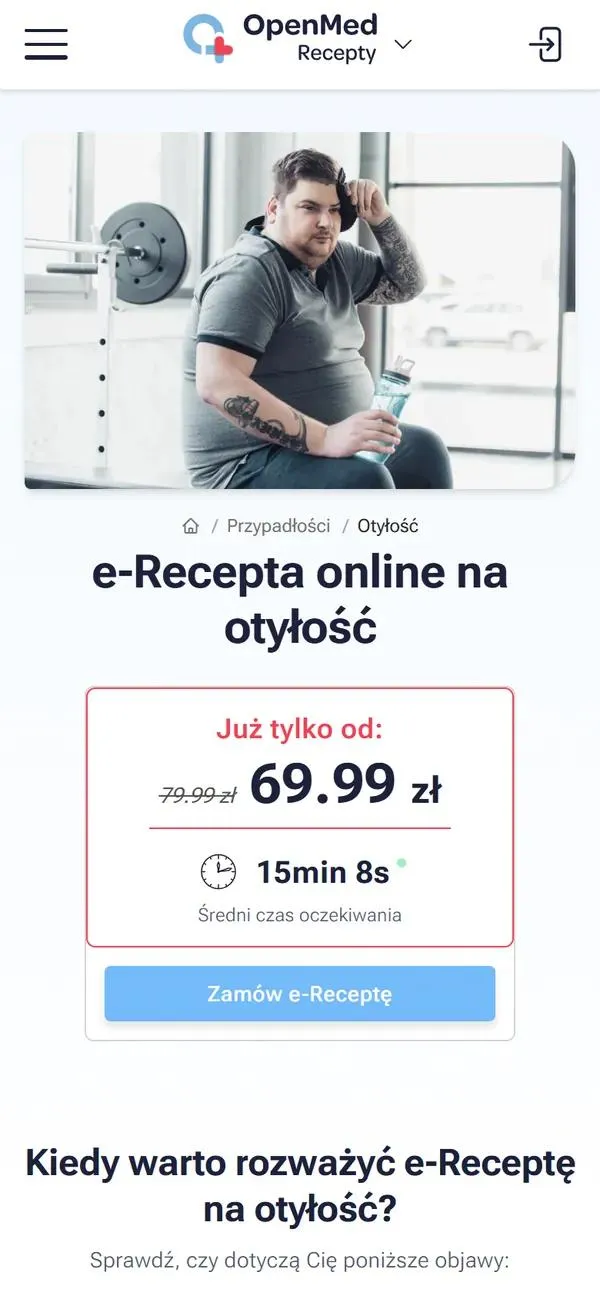
Obesity e-prescription page on mobile: photo, consultation price, average waiting time and an Order e-prescription button
01 Each condition has its own page, which answers a specific Google search and leads straight to ordering an e-prescription.
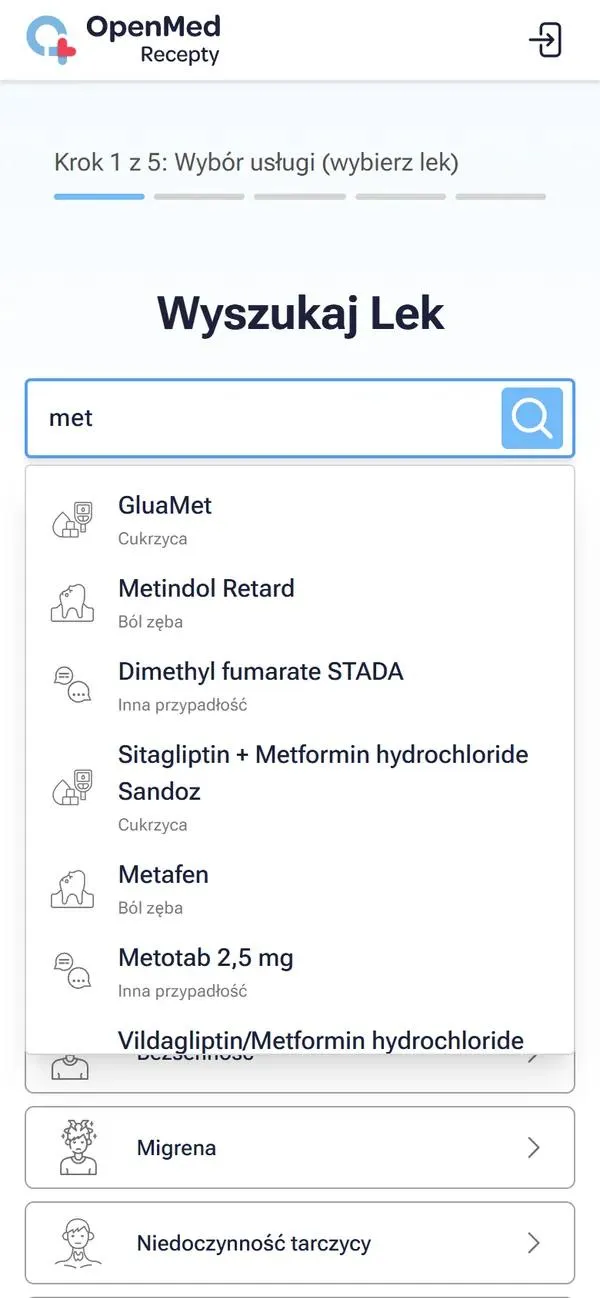
Step 1 of 5 on mobile: after typing "met", the search suggests medications and shows the condition under each name
02 The search suggests medications from the first few letters and shows the condition next to each one. The condition determines the questions in the questionnaire the patient fills in at step 2.
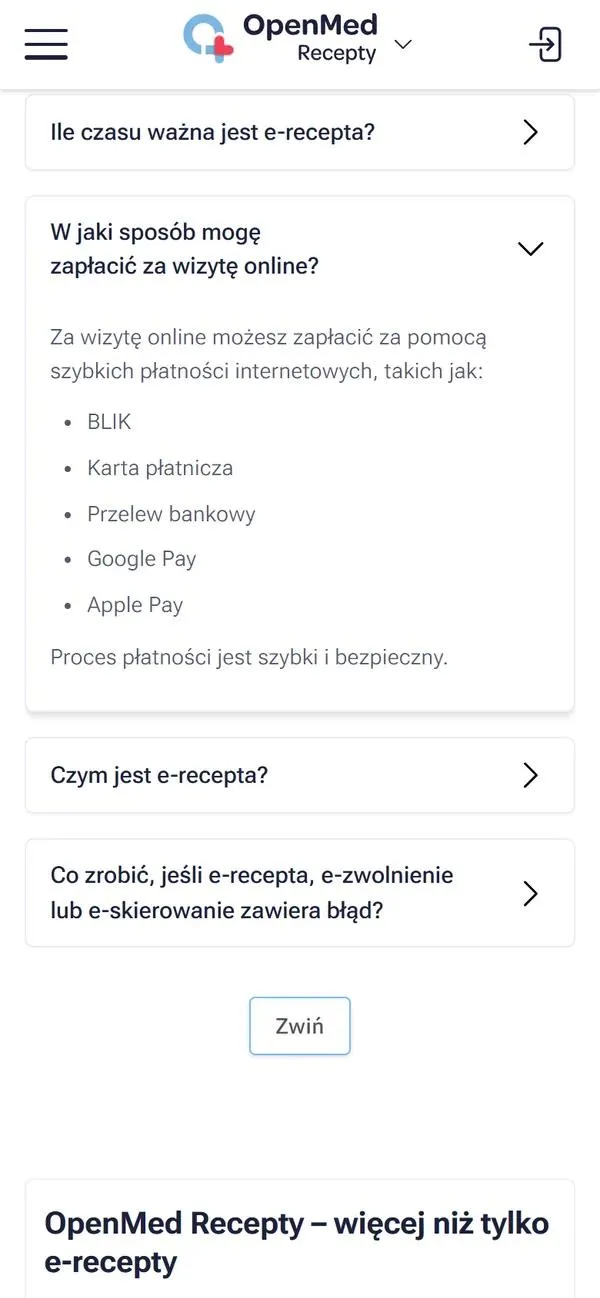
Expanded FAQ question on mobile: paying for an online visit by BLIK, card, bank transfer, Google Pay or Apple Pay
03 The patient pays for the consultation right away through Przelewy24. The request reaches the doctor only after payment, so the doctor wastes no time on unpaid orders.

/ 03 technology and integrations

Technology choices

We built the patient-facing part in Next.js. The home page is rendered on the server (SSR), so it loads fast and Google reads it well. That matters, because the platform wins its patients from search.

Condition pages, such as the obesity e-prescription, also bring patients in from search. Each one answers a specific search, shows a list of popular medications and has a button that leads straight to the order.

The doctor's panel is a single-page application (SPA) in React. Views switch without a page reload, so a doctor handling patients one after another never waits for the next screen to load. We built the backend in Spring Boot on Java, with medical data protection and integrations with state systems in mind.

Thanks to the P1 integration, the e-prescription ends up where the pharmacist looks for it

Integration is what separates a medical platform from an order form: a document from OpenMed Recepty goes to the same systems as a document from the consulting room. The platform sends the e-prescription directly to P1 and the sick leave certificate (L4) to ZUS. P1 is the Polish state e-health platform from which pharmacies and medical facilities across Poland retrieve e-prescriptions and e-referrals.

The patient receives the e-prescription by text message or e-mail and fills it at any pharmacy by giving their PESEL number and a four-digit code. The employer sees the sick leave certificate on their PUE/eZUS profile, so the patient doesn't have to deliver it anywhere.

Azure and Cloudflare: infrastructure for growing traffic

The platform runs in the Microsoft Azure cloud, so as the number of patients grows, scaling it up is easy. Data is stored in the same cloud in a relational Azure SQL Database. Traffic to the application passes through Cloudflare, which adds another layer of protection.

Documents from the platform end up where documents from the consulting room do: the e-prescription in P1, the sick leave certificate at ZUS.

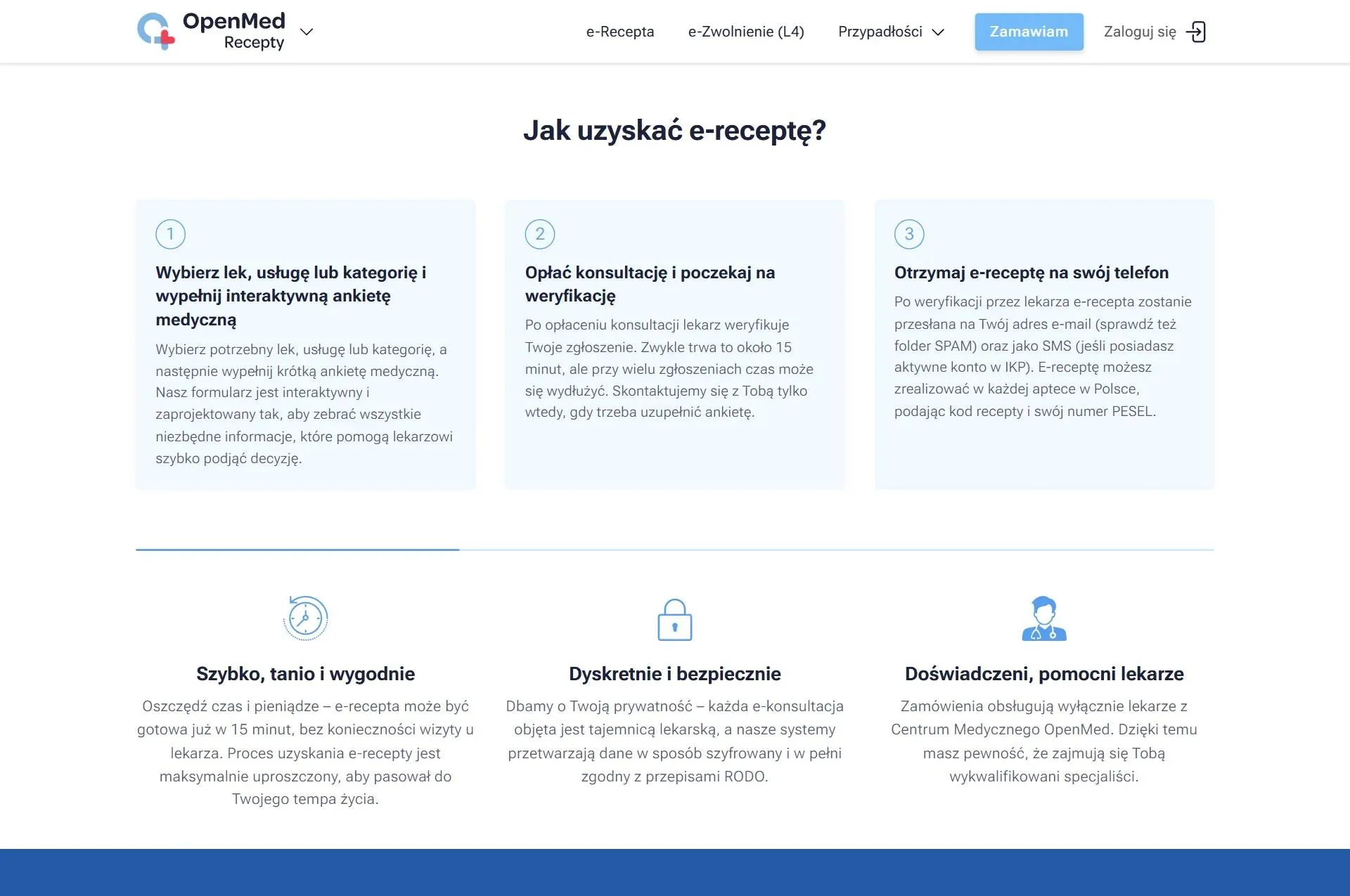
04 Three steps instead of a visit: the patient fills in the questionnaire and pays for the consultation, and after the doctor's review receives the e-prescription by text message or e-mail.
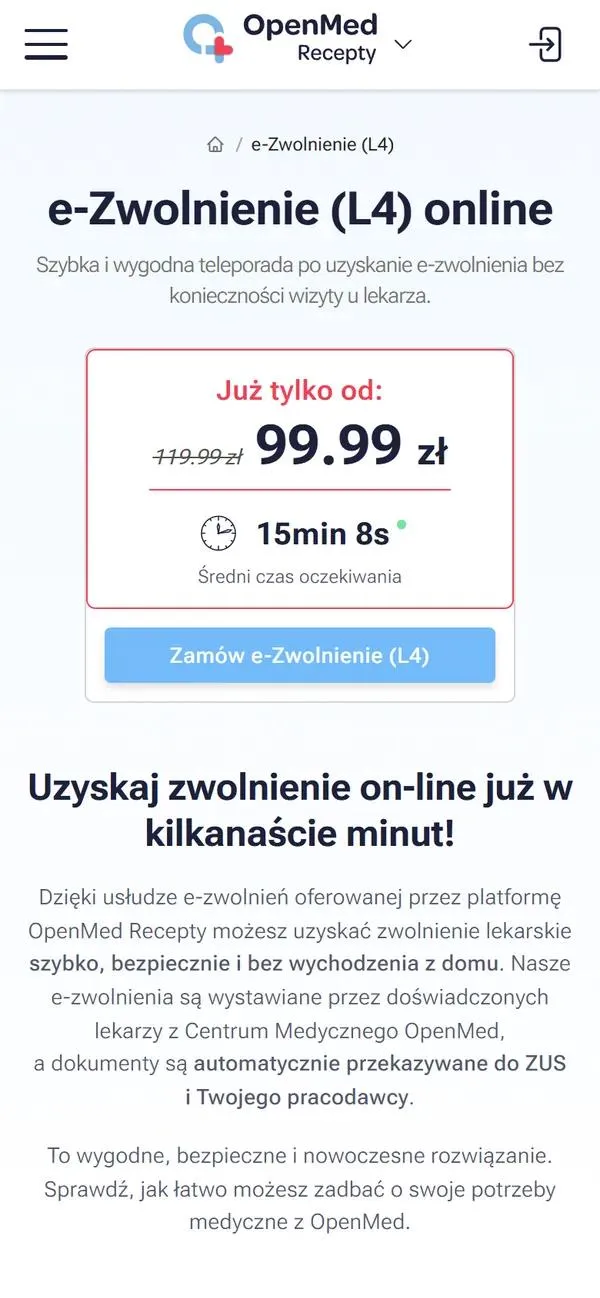
Sick leave certificate (L4) page on mobile: consultation price, average waiting time, order button and service description
05 The patient orders a sick leave certificate from their phone and doesn't have to deliver it anywhere: it goes to ZUS, and the employer sees it on their PUE/eZUS profile.

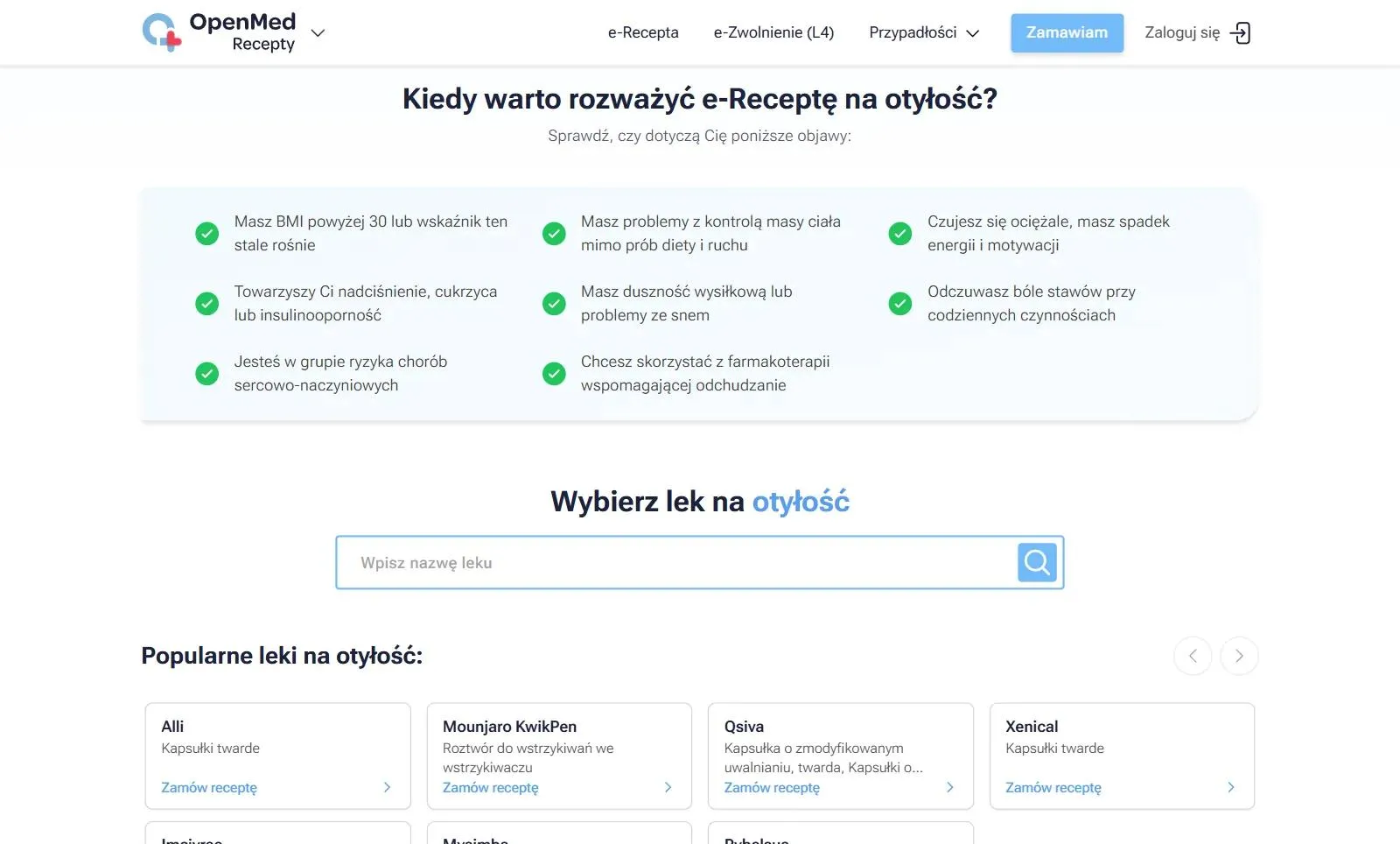
The patient can start from a condition: the page suggests medications, and the questionnaire asks for what the doctor needs to make a decision.

06 The condition page helps patients check whether the service is right for them and leads straight from the list of popular medications to an order.
07 The questions depend on the condition: for obesity they cover body weight and BMI, among other things. The box next to them warns that the service is not a prescription on demand and the doctor decides whether to issue one.

/ results

  • Hundreds patients every month

    2025
    Source: platform data

  • +45 % doctor productivity

    2025
    Source: project data

  • 5/5 patient rating on Google

    average patient rating
    Source: Google reviews

The platform has been running since 2025 and has served hundreds of patients a month from the start. The gain in doctor productivity covers its first year of operation. The 5/5 rating is the average of patients' Google reviews of the service, and the badge on the platform's home page shows the same score.

About the Client

Industry: Medical
Location: Poland - Warsaw and Płock
Company Size: 101-200
Founded: 2017

OpenMed Recepty is a telemedicine platform co-created by the OpenMed Group and WebProfessor. Patient requests on it are handled by doctors from OpenMed Centrum Medyczne, a network of clinics in Warsaw and Płock.

OpenMed Centrum Medyczne sees patients in more than 40 specialties, and the group's team includes more than 100 doctors. When a case calls for an in-person visit, a platform patient can continue treatment at one of the clinics.

Karol Sierpatowski - Board member

Karol Sierpatowski

Board member

"WebProfessor has been supporting the technology side of our medical centers and our other business ventures for more than 5 years. Over that time we've delivered a whole range of projects together, from websites, through systems that support the day-to-day operations of our clinics, all the way to a portal for issuing medical documents.

What really sets the WebProfessor team apart is their high level of commitment, their expert knowledge and their ability to turn complex business needs into functional, scalable technology solutions that comply with regulations.

WebProfessor has a very good understanding of what makes the medical sector different, both in terms of legal requirements and the real expectations of patients and staff.

I wholeheartedly recommend them as a reliable, predictable and effective technology partner."

Online medical services should be planned around the clinic's own process

We designed the platform from the start so it could grow with the clinic's range of services. Each new online service is added on the same foundation, so nothing has to be rebuilt from scratch, patients get new options sooner, and doctors keep working in a panel they already know. We also work with the OpenMed Group on other projects: for its clinics we built, among others, Medbill and the OpenMed Centrum Medyczne website.

If you run a medical facility or a healthcare business and want to serve some of your patients online, a custom web application lets you do it on your own terms: with your doctors, your range of services and a patient journey tailored to your facility. We can help you plan it, build it and connect it to the systems healthcare relies on.

/ questions

Questions people ask after reading this case study

The patient picks a medication or a condition, fills in a medical questionnaire and pays for the consultation. An OpenMed doctor reviews the request in the panel and decides whether to issue an e-prescription, which the platform sends to P1. The patient receives it by text message or e-mail and fills it at any pharmacy.

Yes. OpenMed Recepty sends e-prescriptions directly to P1, where pharmacies across Poland retrieve them. Sick leave certificates (L4) go to ZUS, and the employer sees them on their PUE/eZUS profile.

We are one of the platform's co-owners and sit on its board. Together with the OpenMed Group we decide how its services develop, while the platform's design and technology are on our side.

No. The patient pays for the consultation, and the doctor decides whether to issue the document or decline after taking a medical history. The patient confirms this in the consents at the last step of the order, before payment.

Each part of the platform has a different job and got a different technology for it. In the patient-facing part, Next.js renders the home page on the server, so it loads fast and Google reads it well. The doctor's panel in React switches views without reloading, and the Spring Boot backend handles the documents and the integrations with P1 and ZUS.

Yes, as long as your facility has its own doctors who can handle requests online. We tailor the patient journey, the questionnaires for each condition and the doctor's panel to your facility's services and working hours. From day one we also design the connection to P1 and ZUS, so documents from the platform end up where documents from the consulting room do.

So, shall
we begin?

Book a meeting